Co-creating sustainable solutions for lasting impact.
Since 2012 I’ve collaborated with businesses, institutions and organisations on sustainability, circular design and waste innovation.
Why collaborate?
What began as eco-friendly furniture evolved into partnerships on material innovation, product development, industry advocacy and research. Being open to new ideas has let me work across hospitality, oil and gas, telecommunications, electronics, banking, agriculture and property development.
True sustainability isn’t just compliance. It’s long-term, innovative solutions that align environmental responsibility with business growth.
Every collaboration is a chance to
- Turn waste into valuable resources through material R&D
- Develop sustainable product lines that are functional and aesthetically innovative
- Create industry-wide change by integrating circular economy principles
- Inspire stakeholders through workshops, installations and community outreach
Eco-friendly corporate gifts made from your own waste
Upcycled corporate gifts tell a true story. Most corporate gifts are bought from a catalogue. Harith's team makes them from a company's own waste instead. The gift then tells a true story about your operations.
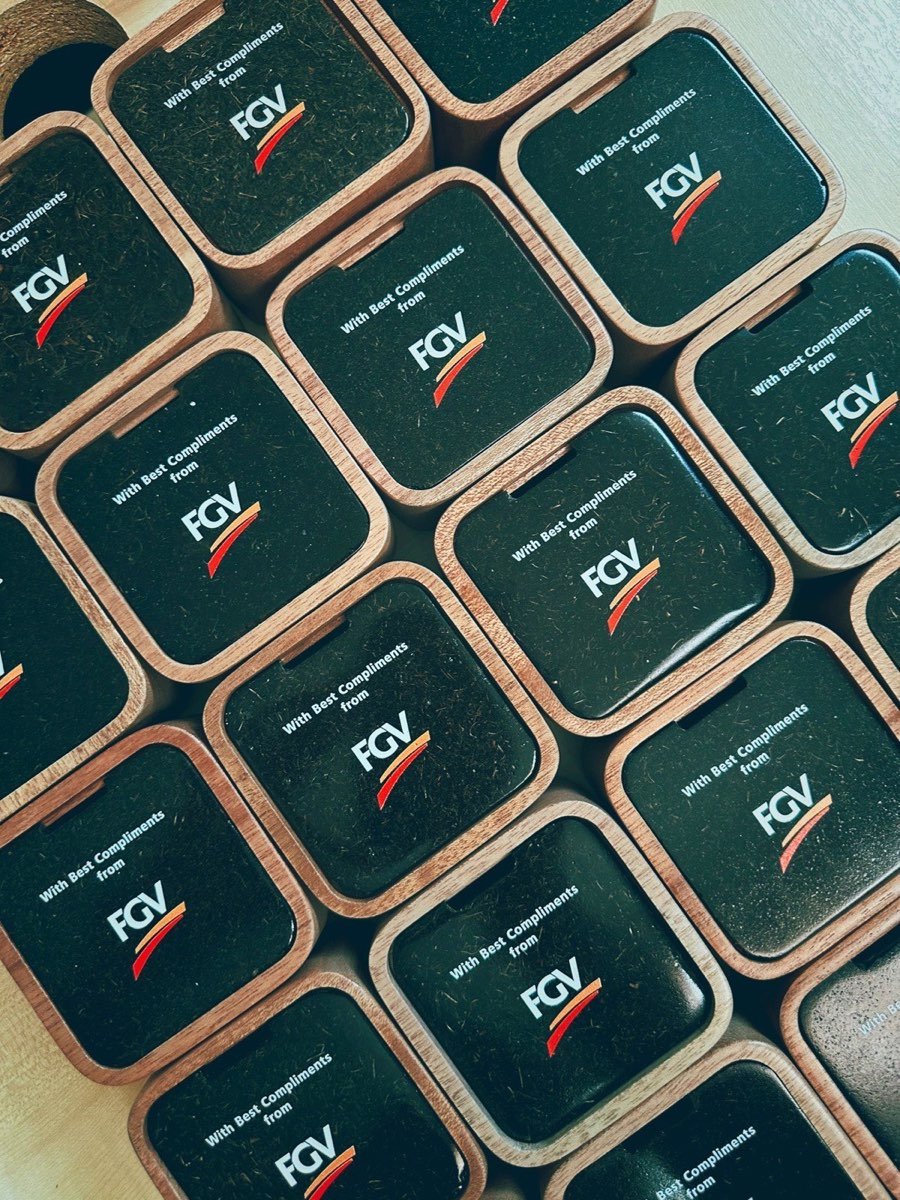
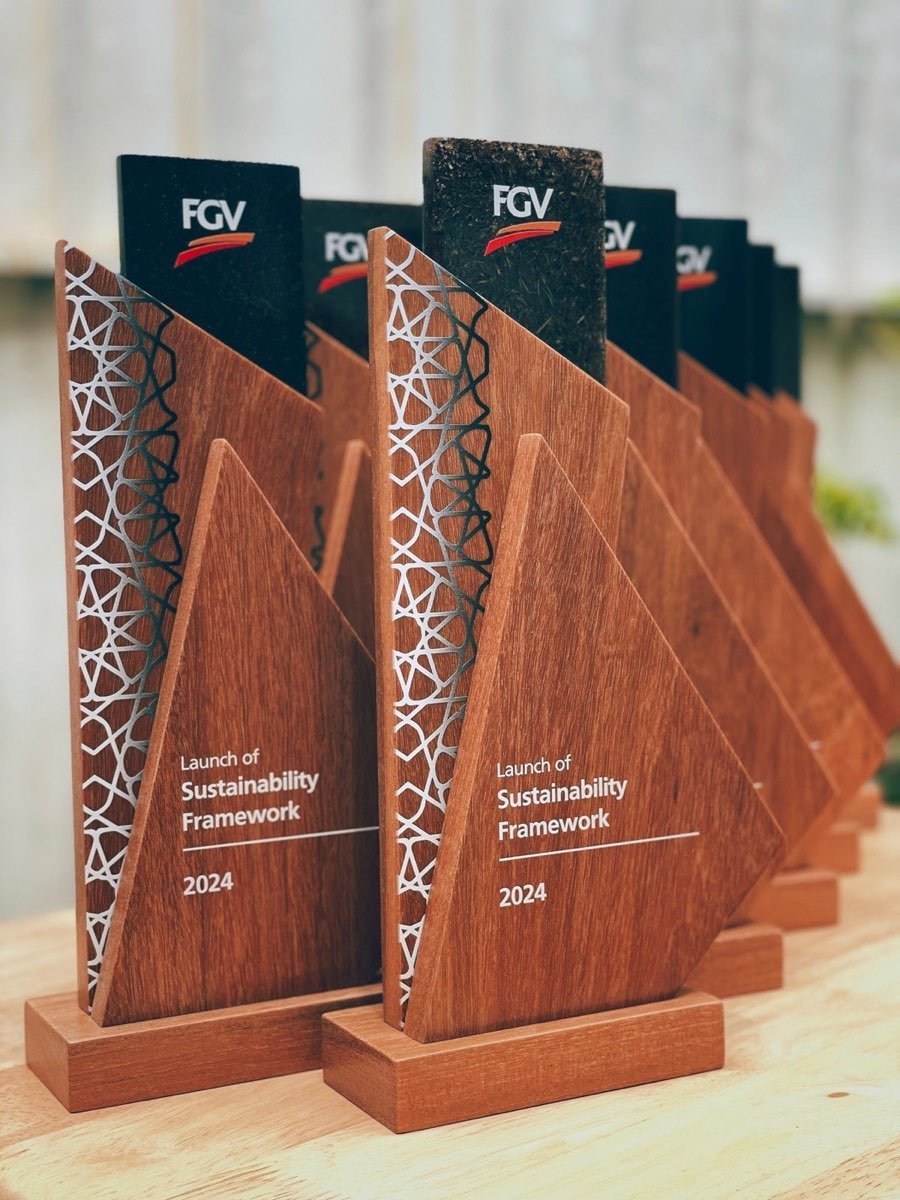
For FGV Holdings, the team mixed 67 kg of empty fruit bunch fibre with polyester binding. The material became 28 trophies and 400 ornament boxes, paired with PEFC-certified wood, for the 2024 Sustainability Framework launch.
Other gift projects include more than 400 gift boxes made from reclaimed pinewood for the KWAP Inspire Conference 2024, and the Balau Box, Malaysia's official gift to 21 economic leaders at APEC in 2020. The team has also turned AirAsia aeroplane parts into trophies, reused Telekom Malaysia's furniture fabric on new furniture, and turned Canon's printer boxes into a youth workshop where participants made stationery holders.
Want custom corporate gifts? Request a quote. See also What is upcycling?.
Used furniture and used timber as a new resource
Used furniture does not always have to be thrown away. First assess the condition of the frame, the fabric and the parts that can still be used. In the Telekom Malaysia project, old furniture fabric was cleaned and reused on new furniture. For Farm Fresh, discarded pallets and crates became display racks, stools and tables.
Suitable reclaimed timber can be turned into furniture or eco-friendly products through inspection, design and prototyping. Share the type, quantity and condition of your material so we can assess what it can become next. For help judging materials, read about reclaimed wood for furniture.
Notable collaborations
From upcycling corporate waste into high-value products to embedding circular economy strategy in operations, these projects show what shared vision can do.
The Datai Langkawi: The Datai Pledge
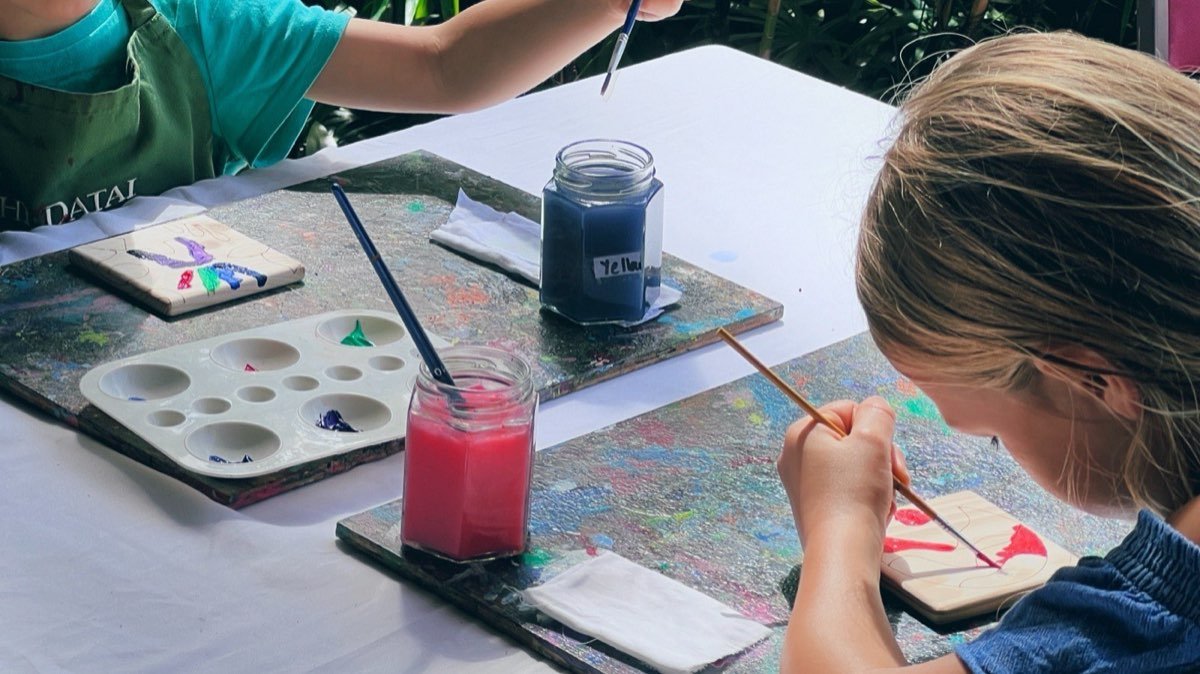
Since 2020, as part of The Datai Pledge, Harith’s collaboration with The Datai Langkawi has grown from an artist-in-residence programme into a multifaceted sustainability partnership. His team has trained in-house carpenters to upcycle salvaged wood, developed sustainability strategies and run guest workshops on Malaysia’s green innovations.
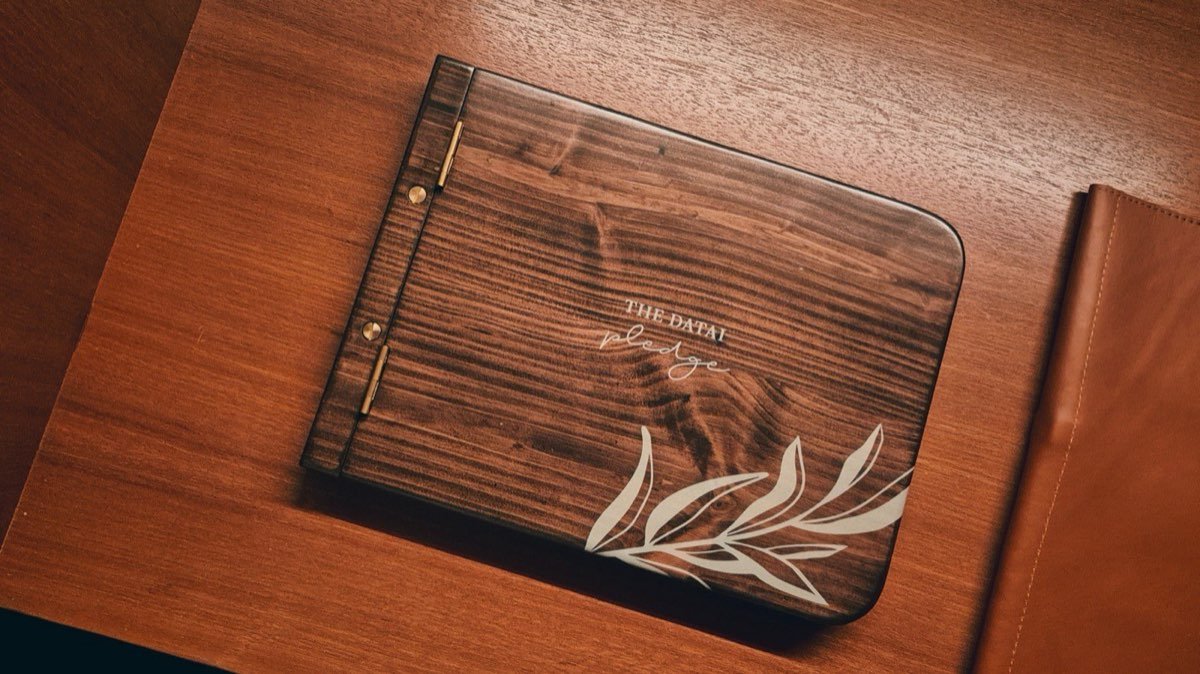
The Datai turns food waste into soil for its gardens and upcycles wax, plastic and glass. Harith’s team made 200 wooden covers from reclaimed pine for The Datai Pledge Impact Report 2023, placed in every guest room.
Farm Fresh: logistics waste into furniture
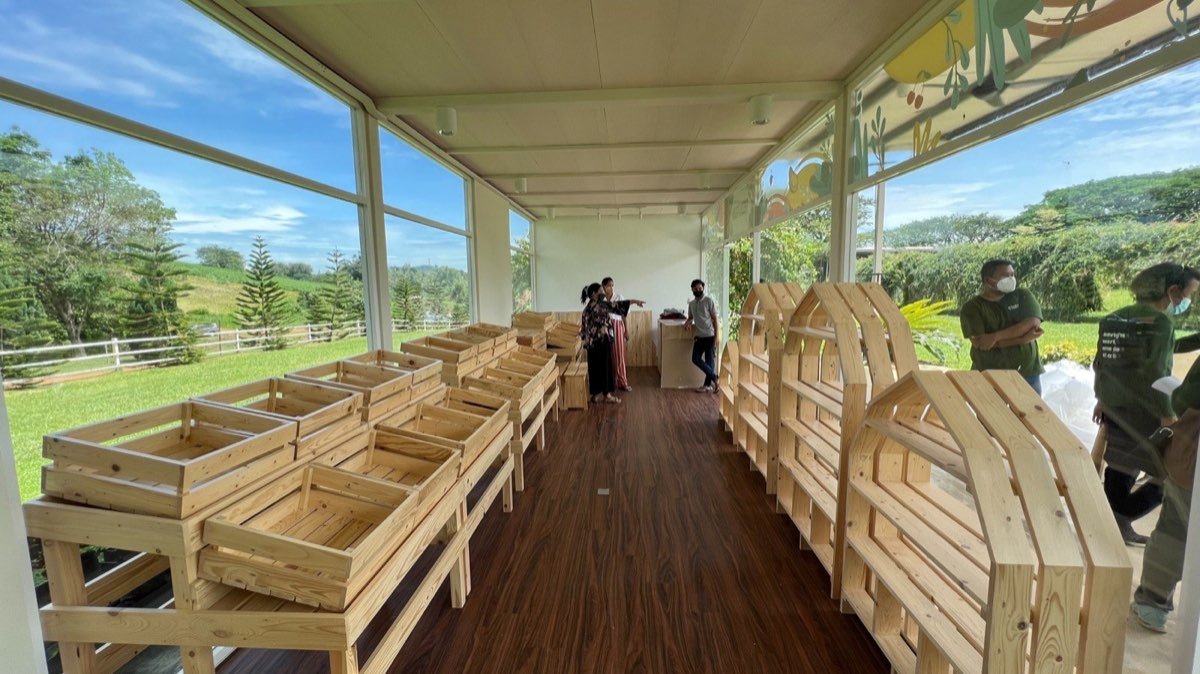
Farm Fresh engaged Harith to guide the upcycling of waste into functional furniture for the 2022 launch of their UPM farm park. His team collected 2,460 kg of discarded transport pallets and crates from their Muadzam Shah factory in Pahang and turned them into display racks, stools, tables and visual merchandising.
The same materials built JomCha outlets across seven states, and the team worked with Majalah Kuntum on a kids’ workshop at the park teaching children about green materials.
FGV Holdings: transforming waste into innovation
When FGV approached Harith in late 2023 with a simple procurement request for corporate gifts, he encouraged them to treat their waste as a resource. The team developed a durable composite by combining 67 kg of EFB with polyester binding, then crafted 28 trophies and 400 ornament boxes, paired with PEFC-certified wood.
The project gave FGV a meaningful, waste-reducing solution and positioned them as a circular economy leader in their industry.
What the collaboration process looks like
- Discover. Explore goals, challenges and vision, and identify waste materials, sustainability gaps or new opportunities.
- Assess. Test material viability, research waste-to-product innovations, and outline practical solutions that balance design, function and sustainability.
- Prototype. Develop prototypes or pilot projects, and collaborate on branding, storytelling and awareness.
- Integrate. Build sustainable solutions into your business model and evaluate measurable impact.
Types of collaboration
- Product innovation: eco-friendly products from sustainable or waste materials
- Research and development: new sustainable technologies and processes
- Co-hosted events: design workshops, roundtables and educational programmes
- Sustainability campaigns: awareness campaigns and advocacy initiatives
Expected deliverables
- Shared ownership of project outcomes
- Prototypes, campaigns or R&D initiatives
- Long-term engagement with both sides contributing resources, ideas and effort
Frequently asked questions
How can my company turn its waste into useful products?
Start by listing your waste and how much you have. Then test which material can become a useful product, build a prototype and run a small pilot. Harith's team did this with FGV, turning 67 kg of empty fruit bunch fibre into 28 trophies and 400 ornament boxes.
Can old fabric, furniture, equipment or packaging be upcycled into corporate gifts?
Often yes. Each item is assessed for its current condition and how easily it can be upcycled while keeping its original form. Past projects by Harith and The Green Factory include Telekom Malaysia's furniture fabric, which was cleaned and reused to wrap new furniture, Canon's printer boxes, which became materials for a youth workshop where participants made stationery holders, and AirAsia's aeroplane parts, which became trophies.
What can we do with retired office furniture instead of throwing it away?
Furniture pieces are assessed on their current condition and on how easily they can be upcycled while keeping their original form. For Telekom Malaysia, the team cleaned and reused furniture fabric to wrap new furniture.
How does a waste-to-product project work, from collection to delivery?
There are four steps. First, discuss your goals and identify the waste. Second, assess the material and plan the design. Third, make prototypes or a pilot batch. Fourth, deliver and measure the impact. For Farm Fresh, the team collected 2,460 kg of discarded pallets and crates and made them into furniture and fixtures for its farm park.
How long does a corporate upcycling project take?
A project can take from one month to six months. The time depends on the scale of the project, the approvals you need, and how many rounds of testing and revision the materials need. A small gift run is at the short end, and a larger project with approvals and material testing is at the long end.
How much does a corporate upcycling project cost in Malaysia?
The cost depends on the type and amount of waste, the testing and prototypes needed, the finish and the quantity. Share your waste stream and goal on the contact page and Harith will reply with a plan.
Can an upcycling project count towards our ESG or CSR report?
Yes, it can give you figures to report. A project records the kilograms of waste diverted and the products made from it. The Telekom Malaysia store refurbishment, for example, recorded 399.3 kg of plywood upcycled and 479.85 kg of cables and metals recycled. Check with your ESG team how it fits your reporting framework.
What companies in Malaysia have done upcycling projects?
Past projects by Harith and The Green Factory include Telekom Malaysia (furniture fabric reused on new furniture), Canon (printer boxes turned into a youth workshop for making stationery holders), AirAsia (aeroplane parts turned into trophies), FGV Holdings (fruit bunch fibre trophies and gift boxes), Farm Fresh (furniture from pallets and crates) and The Datai Langkawi.
Have an idea or project in mind?
Let’s collaborate to create meaningful change.
Submit your enquiry